 Rebecca Regnery is the Humane Society International's Deputy Director of Wildlife. Read here to learn about the upcoming CITES CoP16 meeting that starts in Bangkok next week as she answers questions about the role CITES can play for wildlife internationally and how the HSI will be involved.

Thursday, February 28, 2013
CITES Q&A with Rebecca Regnery
Rebecca Regnery is the Humane Society International's Deputy Director of Wildlife. Read here to learn about the upcoming CITES CoP16 meeting that starts in Bangkok next week as she answers questions about the role CITES can play for wildlife internationally and how the HSI will be involved.

Africa: International Guidelines Take Aim At Illegal Fishing
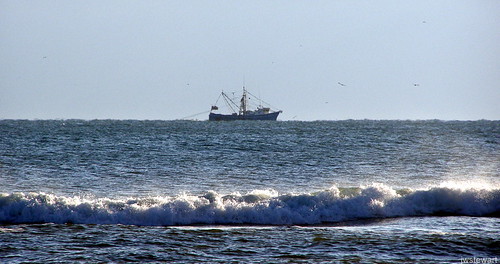 After several years of negotiations, countries have taken a major step against illegal, unreported and unregulated fishing (IUU), one of the greatest threats to sustainable fisheries and related livelihoods. International guidelines developed through an FAO-led consultative process aim to cut down on IUU fishing by improving the accountability of flag states - those countries which register fishing vessels and authorize them to fly their flags.
Sir Richard Branson - Protect Manta Rays
 Sir Richard Branson, international ambassador for Manta Rays, asks for your help. Manta Rays are now under severe threat from unregulated trade in their gills. If we do not act quickly, Manta Rays may be lost forever. Watch his message here.
WildAid and Shark Savers co-founded the Manta Ray of Hope Project, a global effort by scientists, researchers, businesses and conservationist to protect the highly vulnerable Manta Rays. Image courtesy of Jeffrey Rotman.
Sir Richard Branson, international ambassador for Manta Rays, asks for your help. Manta Rays are now under severe threat from unregulated trade in their gills. If we do not act quickly, Manta Rays may be lost forever. Watch his message here.
WildAid and Shark Savers co-founded the Manta Ray of Hope Project, a global effort by scientists, researchers, businesses and conservationist to protect the highly vulnerable Manta Rays. Image courtesy of Jeffrey Rotman.
Mantas Last Dance
 The time of the manta rays is over, lost to greed and exploitation by humans. Hannah is a wanderer, a sea gypsy, a manta ray reincarnate as person, lost to the world. Alone and searching for a time long past, she gives herself up to the sea, slowly walking into the waves and drifting into the dark abyss. In a dream-state, she awakens falling through water, bubbles and lights. Watch the short film from Blue Sphere Media.
Will Reform Finally End The Plunder of Europe’s Fisheries?
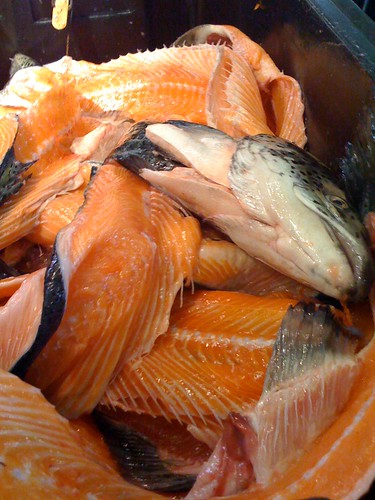 Maria Damanaki, Europe’s crusading fisheries minister, is making major headway in changing a cozy, “old boys” network that over-subsidized the European fishing industry and brought about the severe overfishing of the continent’s marine bounty.
PharmaSea to scour ocean depths for new drugs
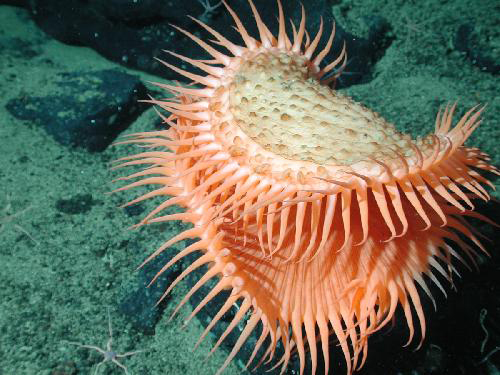 A new project will soon see scientists trawling the ocean bottoms for new bioactive compounds.
 Scientists on the PharmaSea mission will haul samples of mud and sediment from the deep sea, isolating marine organisms in the hunt for novel drug candidates.
Shell to suspend Arctic offshore drilling program over safety fears
 Oil company will 'pause' exploration off Alaska's northern coasts over concerns for equipment and employees. Shell shut down its 2013 drilling season in the Arctic waters off Alaska on Wednesday, after a series of mishaps and mechanical failures. The oil company said in a statement it was putting its operations off the coast of Alaska on pause for 2013, but remained committed to drilling at a later stage.
CITES4sharks Coalition launches website ahead of CoP16 in Bangkok next week
 CITES4sharks launches today and with the support of Oceans 5, will be working together to secure CITES listings for shark and ray species at the 16th Conference of Parties starting next week.
 Government representatives will vote on proposals to list under the CITES Appendices a record number of shark and rays species, including the oceanic whitetip shark, the porbeagle, three types of hammerheads, both manta rays, and the freshwater sawfish.
INTERPOL - Project Scale
The international criminal investigation body INTERPOL has launched a special unit to fight illegal fishing this week. Watch this special report from Lyon, France by Charlotte Smith..
Wednesday, February 27, 2013
Illegal fishing: what happens at sea too often stays at sea
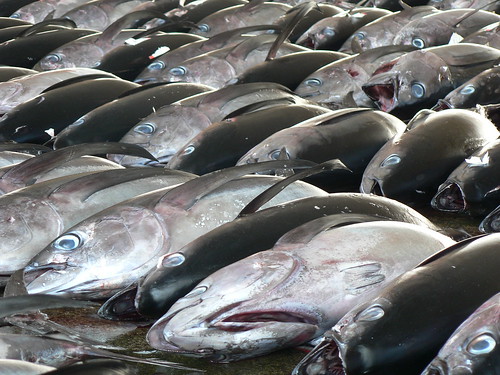 The problem of illegal fishing is enormous and Greenpeace has been working hard to combat illegal fishing for many years. To coincide with the Interpol conference this week, they have released the findings from their most recent ship tours in the Indian and Pacific Oceans on illegal fishing. Read this blog post by Sari Tolvanen to find out more.
 Image courtesy of Crystalline Radical via Flickr (CC BY 2.0)
Mixed feelings amongst the European Fishing Industry regarding the political agreement in the Council of the EU on the implementation of the discard ban
 Following the political agreement reached this morning in the Council of the EU on the implementation of the discard ban and the possibility of by-catch quotas, the Presidents of Europêche, Javier Garat, and of the Copa-Cogeca FISH WG, Giampaolo BUONFIGLIO, have first of all recalled that the progressive maximal reduction of discards constitutes, according to the fishing industry in Europe, a priority target of the future CFP.
Blue Carbon: Storing Carbon in Coastal Environments
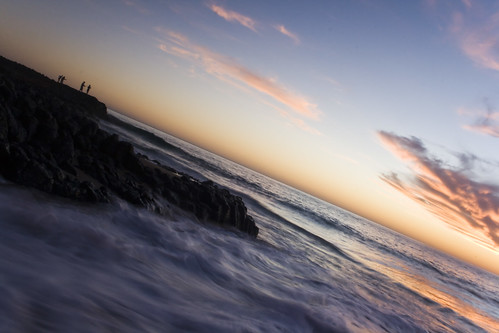 A new research project will survey the entire coastline of Western Australia in order to determine its ‘blue carbon’ potential.
The project is headed by the Commonwealth Scientific and Industrial Research Organisation (CSIRO) along with eight institutions, including the University of Western Australia (UWA).
Interpol initiative aims to batter fisheries crime
 Project Scale launched to chip away at $23bn illegal activities contributing to resource depletion and trafficking.
 A new international initiative to crack down on illegal fishing practices is set to be launched later today. Interpol's Project Scale is designed to help authorities combat illegal fishing activities estimated to be worth between $10bn and $23bn a year, such as harvesting of prohibited species, and fishing out-of-season, over set quotas, or without a licence.
EU ministers back fish dumping ban
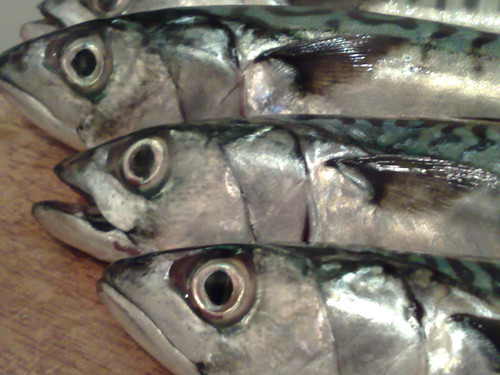 European Union fisheries ministers have agreed to phase out the controversial practice of dumping unwanted fish. After a tense all-night meeting, ministers said a ban on "discards" should be phased in, starting in January 2014 for certain types of fish.
As Global fish populations crash, giant Marine Protected Areas reserve savings for our future.
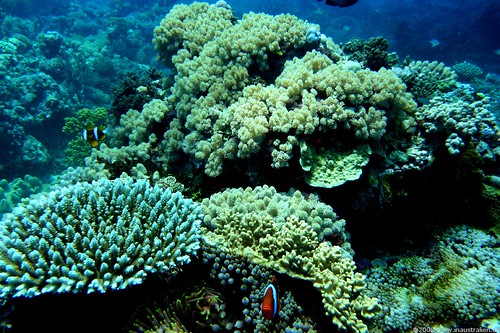 Seven years after the Northwestern Hawaiian Islands became the world’s first oceanic no-fishing marine reserve, Hawaii’s example is being followed by countries ranging from Great Britain to Chile, giving hope that the huge areas they are protecting will become invaluable food banks as the world’s oceans are inexorably fished out and the global catch continues its 30-year-old decline.
Tuesday, February 26, 2013
Seals take scientists to Antarctic's ocean floor
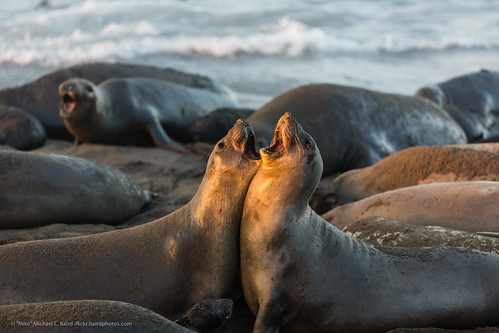 Elephant seals wearing head sensors and swimming deep beneath Antarctic ice have helped scientists better understand how the ocean's coldest, deepest waters are formed, providing vital clues to understanding its role in the world's climate.
INTERPOL Launches Major Global Initiative to Fight Illegal Fishing
 Today, INTERPOL’s Environmental Crime Programme, with support from The Pew Charitable Trusts, the Norwegian Ministry of Foreign Affairs and the Norwegian Agency for Development Cooperation, announced the launch of a major global effort to stem illegal fishing and its associated crimes. This initiative, called Project SCALE, was launched at the 1st INTERPOL International Fisheries Enforcement Conference held at the INTERPOL General Secretariat in Lyon, France.
Fish discards ban 'may be diluted'
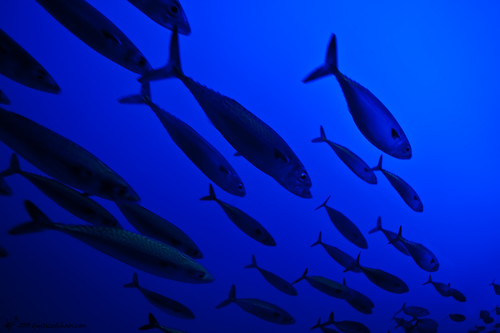 Europe's fisheries ministers may dilute plans for a total ban on the practice of discarding fish at sea, as they meet in Brussels. An outright discards ban was widely welcomed when backed by the European Parliament last month, but it is being resisted by France, Spain and others.
Why Ocean Protection Is More Critical Now Than Ever Before
 Around 71% of our planet's surface is covered in water, hence we quite often refer to it as the blue planet. It's a whole different world that the majority of us, including myself, do not know much about.
 It's also a part of the world that we are wrecking at an accelerating pace and because we cannot see the damage that is taking place, we can choose to believe that it's not taking place.
Will this be the year for sharks and rays? Oceans inc will be finding out and reporting back from CITES 2013
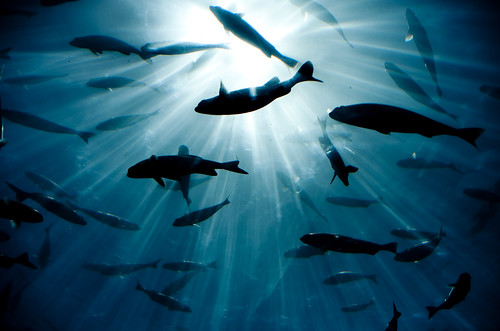 The 16th meeting of the Conference of the Parties (CoP) will be held from March 3–14, 2013, in Bangkok, Thailand. CITES is widely recognized as one of the most effective and best-enforced international conservation agreements. It offers protection to more than 30,000 species around the globe and has been instrumental in preventing the extinction of numerous plants and animals.
Monday, February 25, 2013
Manta ray struggles for survival
 A giant “maduwa”, or manta ray, was netted last week by fisherman in Welipatanwila, Ambalanthota, on the South coast of Sri Lanka. The ocean creature was pregnant and weighed 1,500 kilograms. A week earlier, another manta ray was caught by fishermen in Akkaraipattu, on the East coast. Both sea creatures have been identified as Giant Oceanic Manta Rays, the largest member of the ray family.
Shark Extinction is Not an Option
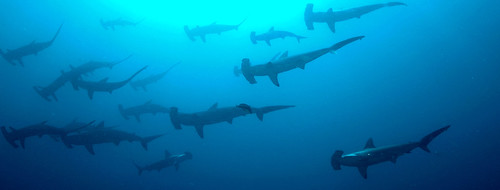 Scuba divers demand international trade protections for world’s most vulnerable sharks and rays. In a matter of days, officials from countries around the world will have a historic opportunity to protect a record number of sharks and rays – including oceanic whitetip sharks, hammerheads and manta rays – from the unsustainable international trade that threatens their survival.
Protecting sharks at CITES Conference
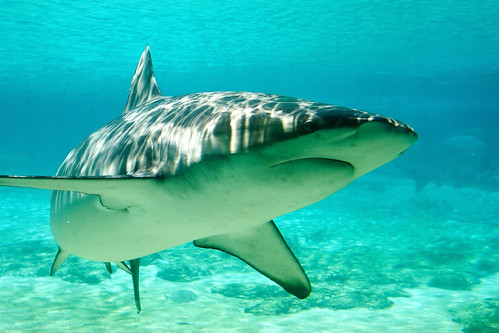 In March a UK delegation will travel to Thailand to attend the 16th Conference of the Parties (CoP) of the Convention on International Trade in Endangered Species (CITES).
 The UK team of experts reflects the breadth of the agenda. It underlines the importance the UK government places on CITES as a key way of delivering conservation and sustainable use measures.
Can new technology save fish?
 A technological revolution is needed for Europe to end the controversial practice of discarding fish, according to the EU’s fisheries commissioner.
Maria Damanaki is calling for boats to be fitted with smart nets to filter out fish which would later be discarded as too small or above quota.
And she wants more on-board cameras to ensure that crews cannot cheat on fishing rules.
A technological revolution is needed for Europe to end the controversial practice of discarding fish, according to the EU’s fisheries commissioner.
Maria Damanaki is calling for boats to be fitted with smart nets to filter out fish which would later be discarded as too small or above quota.
And she wants more on-board cameras to ensure that crews cannot cheat on fishing rules.
Latest from World Ocean Radio: Conrad and the Sea
 Many of literature's great classics are set on the ocean where Nature's beauty and force are bound to the human experience. In this episode of World Ocean Radio host Peter Neill will suggest that the greatest author of such sea-based literature was Joseph Conrad and will share some observations from one of Conrad's most well-known books on the ocean, "The Mirror of the Sea."
Fragments of ancient continent buried under Indian Ocean
 Fragments of an ancient continent are buried beneath the floor of the Indian Ocean, a study suggests.
Researchers have found evidence for a landmass that would have existed between 2,000 and 85 million years ago.
The strip of land, which scientists have called Mauritia, eventually fragmented and vanished beneath the waves as the modern world started to take shape. The study is published in the journal Nature Geoscience.
Fragments of an ancient continent are buried beneath the floor of the Indian Ocean, a study suggests.
Researchers have found evidence for a landmass that would have existed between 2,000 and 85 million years ago.
The strip of land, which scientists have called Mauritia, eventually fragmented and vanished beneath the waves as the modern world started to take shape. The study is published in the journal Nature Geoscience.
Saturday, February 23, 2013
The Deep Sea - A European Perspective
The Fisheries Committee of the European Parliament held a special hearing this week to consider proposals to reform deep sea fishing. Oceans inc's Charlotte Smith reports from Brussels on efforts to clean up what is widely seen as the most destructive type of fishing in the ocean.
Friday, February 22, 2013
Pew experts discuss protection for sharks and manta rays - Episode 1: Sharks' Big Hope
 It’s big business, a big vote, and a big moment for sharks.
 The Conference of the Parties to the Convention on International Trade in Endangered Species of Wild Fauna and Flora, or CITES, takes place in Bangkok, Thailand - March 3 to 14. Tune in to Oceans inc to keep up-to-date on the series of podcasts released in conjunction with this conference.
Secrets of world’s richest marine area revealed
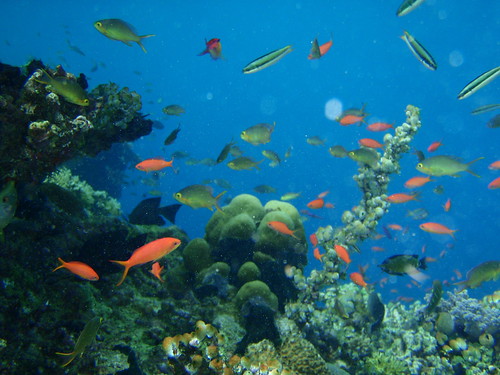 A new study finds that sea surface temperature, as well as the size and variety of habitats are the main factors responsible for the proliferation of marine life in the Coral Triangle – the most biologically diverse marine region in the world.
Widespread Seafood Fraud and Some Thoughts on Scientific Sampling

This report in the Washington Post is getting great traction this week. The report builds on about two years of DNA testing by Oceana to understand whether the seafood we buy is, in fact, actually the seafood we wanted to buy. As pointed out in the past, seafood fraud generally results in customers buying cheaper seafood substitutes for fish such as cod, tuna, and snapper. And sometimes it even poses health risks as consumers eat seafood that can cause gastro-intestinal distress or, perhaps, is higher in mercury content.
Thursday, February 21, 2013
Indonesia announces shark, manta ray sanctuary
 Indonesia has announced a new shark and manta ray sanctuary, the first to protect the species in the rich marine ecosystem of the Coral Triangle, known as the "Amazon of the ocean".
Environmentalists yesterday welcomed the creation of the 46,000-square-kilometre (18,000-square-mile) protection zone, in an area at risk from both overfishing and climate change.
Indonesia has announced a new shark and manta ray sanctuary, the first to protect the species in the rich marine ecosystem of the Coral Triangle, known as the "Amazon of the ocean".
Environmentalists yesterday welcomed the creation of the 46,000-square-kilometre (18,000-square-mile) protection zone, in an area at risk from both overfishing and climate change.
Endangered sharks return to Bahamas 'home'
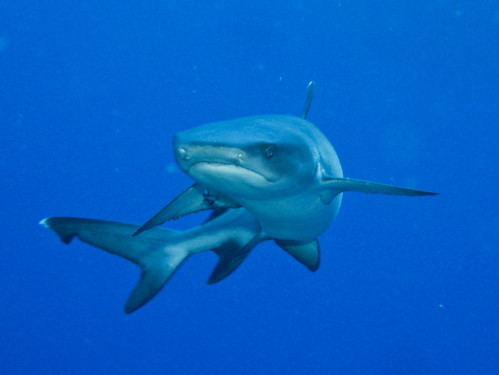 Oceanic whitetip sharks return home to protected Bahamas waters, surprising scientists.
Previously thought to be wide-ranging animals, a tagging survey has revealed that the sharks frequently revisit the same areas around the island.
Conservationists have listed the sharks as Vulnerable globally and Critically Endangered in parts of their range.
Oceanic whitetip sharks return home to protected Bahamas waters, surprising scientists.
Previously thought to be wide-ranging animals, a tagging survey has revealed that the sharks frequently revisit the same areas around the island.
Conservationists have listed the sharks as Vulnerable globally and Critically Endangered in parts of their range.
Clean Water Act allows for Offshore Environmental Pollution
 Offshore oil & gas facilities in the Gulf of Mexico discharge Produced Water into the Gulf of Mexico. The Congress has set limits on what this discharged produced water can contain in the form of oil , grease and chemicals.
Antarctica needs marine protected areas
 The Commission for Conservation of Antarctic Marine Living Resources (CCAMLR) in its meeting from October 23 to November 1, 2012, failed to deliver any agreement on marine protected areas (MPAs) for Antarctica’s Southern Ocean. CCAMLR, made up of 24 countries and the European Union, had been considering proposals for turning two critical areas in Antarctica’s Southern Ocean into MPAs at the meeting, including 1.6 million square kilometres of the Ross Sea, the world’s most intact marine ecosystem, and 1.9 million square kilometres of coastal area in the East Antarctic.
Deepest undersea vents discovered by UK team
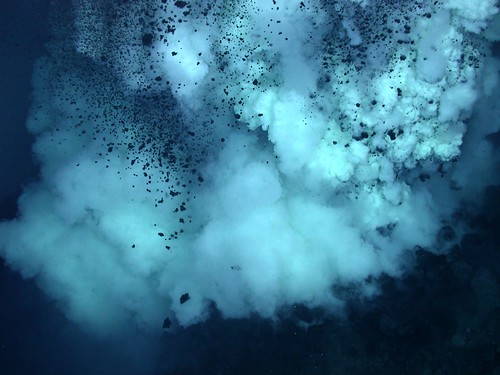 UK scientists exploring the ocean floor in the Caribbean have discovered an "astounding" set of hydrothermal vents, the deepest anywhere in the world.
Deploying a remotely-operated vehicle (ROV) in the Cayman Trough, they stumbled across a previously-unknown site nearly 5000m below the surface.
UK scientists exploring the ocean floor in the Caribbean have discovered an "astounding" set of hydrothermal vents, the deepest anywhere in the world.
Deploying a remotely-operated vehicle (ROV) in the Cayman Trough, they stumbled across a previously-unknown site nearly 5000m below the surface.
Wednesday, February 20, 2013
Ocean heatwave scorched fish & coral reefs
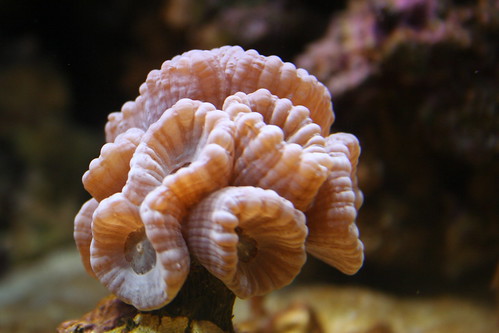 A marine heatwave off Western Australia that killed fish and bleached coral was driven by unusual features in a warm ocean current, new research shows. During the 2011 heatwave, water temperatures were more than three degrees Celsius above long-term seasonal averages.
At the peak of the event, for a two-week period, water temperatures climbed up to five degrees Celsius above long-term seasonal averages.
A marine heatwave off Western Australia that killed fish and bleached coral was driven by unusual features in a warm ocean current, new research shows. During the 2011 heatwave, water temperatures were more than three degrees Celsius above long-term seasonal averages.
At the peak of the event, for a two-week period, water temperatures climbed up to five degrees Celsius above long-term seasonal averages.
Sea Shepherd activists clash with Japanese whaler in Southern Ocean
 Marine conservation society reports double ramming and calls on Australia to send naval vessel to scene.
Tuesday, February 19, 2013
Whales benefit from action on ocean noise
 Scientists are working to reduce the noise levels experienced by whales from North Atlantic shipping.
The blare is making it difficult for the animals to communicate with each other, which in turn is affecting their ability to find food and mates.
The researchers have persuaded shipping companies to change their routes in and around the Boston area.
Scientists are working to reduce the noise levels experienced by whales from North Atlantic shipping.
The blare is making it difficult for the animals to communicate with each other, which in turn is affecting their ability to find food and mates.
The researchers have persuaded shipping companies to change their routes in and around the Boston area.
#CITES4SHARKS Here We Come!
 In a matter of days, officials from countries around the world will have a historic opportunity to protect a record number of sharks and rays – including oceanic whitetip sharks, hammerheads and manta rays. Project AWARE will be on the ground during the 16th meeting of the Conference of the Parties to CITES, held in Bangkok, Thailand, from 3 – 14 March.
Monday, February 18, 2013
Marine mussels inspire 'glue' for surgical repair and cancer drug delivery
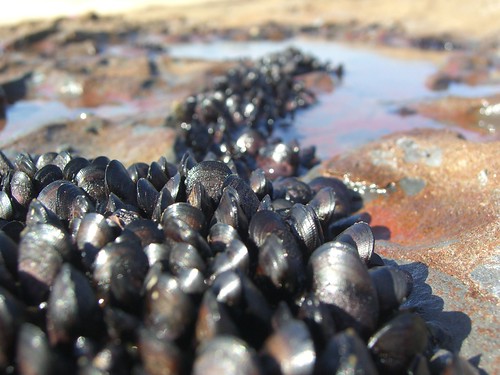 Marine mussels can adhere to virtually all inorganic and organic surfaces, sustaining their tenacious bonds in saltwater, including turbulent tidal environments.
Northwestern University's Phillip B. Messersmith has created new materials that mimic mussel adhesive proteins for three medical applications: sealants for fetal membrane repair, self-setting antibacterial hydrogels, and polymers for cancer drug delivery and thermal destruction of cancer cells.
Marine mussels can adhere to virtually all inorganic and organic surfaces, sustaining their tenacious bonds in saltwater, including turbulent tidal environments.
Northwestern University's Phillip B. Messersmith has created new materials that mimic mussel adhesive proteins for three medical applications: sealants for fetal membrane repair, self-setting antibacterial hydrogels, and polymers for cancer drug delivery and thermal destruction of cancer cells.
Column-Ice-free Arctic Ocean in 2030?
 Vast uncertainty remains over the causes of melting Arctic sea ice and when it may disappear altogether during the summer, which would have consequences for oil explorers, shipping firms and the fight against climate change.
Latest from World Ocean Radio: Canals
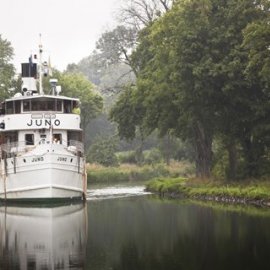 Canals bring people together through work, exchange and community. They hold a special place for many as the lifeblood of a city, as historic centers, as sites that provide us with a better understanding of architecture, art, culture, civilization and more. In this episode of World Ocean Radio, host Peter Neill will take us on a tour of the canals of the world.
Swissotel Le Concorde Goes Fin Free
 Today, Fin Free Thailand is pleased to announce that five-star hotel, Swissotel Le Concorde Bangkok, has signed the Fin Free pledge and publicly stated a new policy completely banning the serving and sale of shark fin.
Friday, February 15, 2013
Chinese appetite for shark fin soup devastating Mozambique coastline
 Standing among coconut and mango trees near the coast of Mozambique, Fernando Nhamussua carefully prepares shark meat for a family meal – and contemplates a basket with a profitable haul of four dried shark fins.
Antibiotics search to focus on sea bed
 Researchers are embarking on an £8m project to discover new antibiotics at the bottom of the ocean. A team, led by scientists at Aberdeen University, is hunting for undiscovered chemicals among life which has evolved in deep sea trenches.
Intermarche fleet is ‘loss-making, destructive, propped up by subsidies’
 France’s largest deep-sea fishing fleet is being artificially propped up by millions in state subsidies and cash injections from its owners, said a French NGO.
Why Hugh Fearnley-Whittingstall's Fish Fight is still necessary
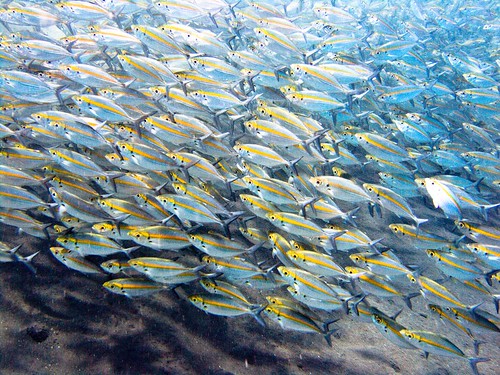 Hugh Fearnley-Whittingstall's Channel 4 TV show Fish Fight has begun a new series. In a stroke of good timing, the European parliament voted last week to phase out the wasteful discarding of fish at sea, the main target of the first series. So you could be forgiven for wondering what there is left to fight for. A great deal, it turns out.
NASA images confirm Arctic Ocean sea ice is thinning at alarming rate
 A team of University of Washington and University of London researchers have reportedly obtained enough data to confirm Arctic Ocean sea ice really is thinning.
 The team, using data collected by NASA’s Ice, Cloud and Land Elevation Satellite (ICESat) and the European Space Agency’s CryoSat-2 satellite, say Arctic sea ice volume declined 36 percent in the autumn and 9 percent in the winter over the last decade. The figures, which build on previous studies, match predictions made by models that show sea ice thinning over the coming decade.
Thursday, February 14, 2013
Hope for the Ocean and its Resources
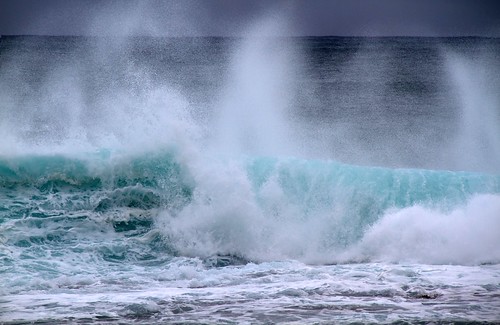 The "high seas" are certainly spoilt and polluted; certainly in no way comparable to the oceanic treasure house left to us a century ago, or even before the production of plastic waste. The GOC (Global Ocean Commission) is a multinational platform for political celebrities. To manage the earth's oceans, it has just been set up to prevent abuse of the sea's resources. The PEW Group and others must be congratulated for helping put this apparently powerful apparatus into operation.
Invisible war rages in world's oceans
 The discovery of new viruses that appear to be spread around the world's oceans hints at a war waging between such viruses and their prey: an abundant group of bacteria.
Anxiety drug found in rivers changes fish behaviour
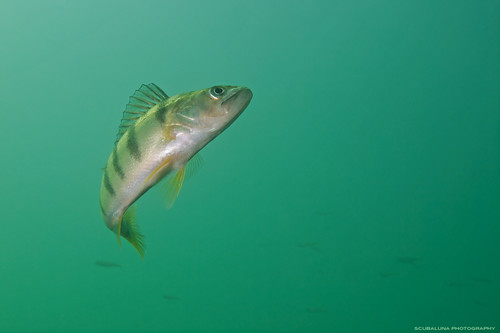 Drugs to treat anxiety in people may alter the behaviour of fish when the chemicals are flushed into rivers, according to scientists. Swedish researchers found that European perch exposed to tiny concentrations of a drug became less sociable, ate more and became more adventurous – all changes in behaviour that could have unexpected ecological impacts on fish populations.
Fish Fight renews campaign to protect the seabed
 Damaging fishing methods and a lack of marine protected zones are being targeted by a renewed campaign to protect the world's dwindling fish stocks, spearheaded by food writer Hugh Fearnley-Whittingstall.
Subscribe to:
Posts (Atom)