 Plans for the exploration for minerals on, or under the floor of the Pacific Ocean are well advanced in a number of Pacific countries. One of the techniques used for finding oil an gas deposits is marine seismic testing, which sometimes uses explosives to vibrate the ground.
Tuesday, April 30, 2013
Marine seismic testing could influence tuna migrations
Plans for the exploration for minerals on, or under the floor of the Pacific Ocean are well advanced in a number of Pacific countries. One of the techniques used for finding oil an gas deposits is marine seismic testing, which sometimes uses explosives to vibrate the ground.
Conservation groups call for international action to protect biodiversity on the high seas
 This week at the United Nations in New York, countries from around the world will convene around the subject of protecting marine diversity on the high seas.
Sharing the Excitement of Ocean Exploration: A Tweet Chat
 NOAA’s dedicated ship of exploration, the Okeanos Explorer, is equipped with the equipment, systems, and personnel to share the excitement of discovery and ocean science with students, teachers, scientists, and the general public on shore in real time.
Monday, April 29, 2013
Fish Uses Sign Language With Other Species
 The coral grouper is an agile hunter, quick to chase and attack prey in the open water. And when its prey dives into cracks and crevasses within a coral reef, the grouper uses its own version of sign language to get help, a new study says. The fish enlists the assistance of two other predators, the giant moray eel and the Napoleon wrasse, waiting up to 25 minutes for one to come into sight.
Latest from World Ocean Radio: Water Security
 The crisis of water is an indisputable one, as evidenced by a public increasingly aware of the urgency of ocean and fresh water issues. In this episode of World Ocean Radio, host Peter Neill will give a stark example of a water cycle interrupted on every level, and will discuss the response required to sustain life on Earth.
Friday, April 26, 2013
Initiative to improve sustainable fish labelling unveiled
 A new initiative to make the labelling of sustainable fish clearer and more consistent for consumers will be launched by industry and retailers on Friday, with the backing of the Fish Fight campaign setup by celebrity chef Hugh Fearnley-Whittingttall.
Thursday, April 25, 2013
Shale mining under Great Barrier Reef 'likely to be banned'
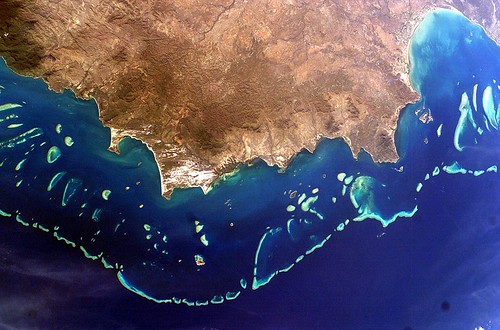 Australia's coastline mining industry undergoing a boom as rules relaxed, but Unesco site to be protected under heritage rules.
Tara Oceans Polar Circle: a new scientific expedition in the Arctic
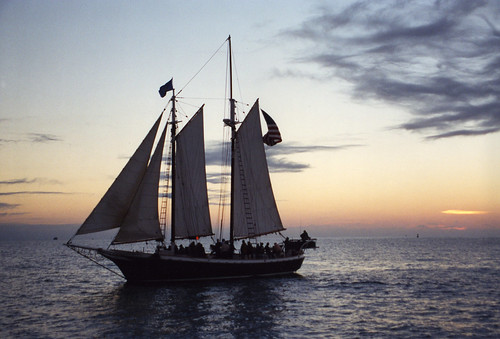 The polar schooner Tara will depart from Lorient on May 19, 2013 for a new expedition: Tara Oceans Polar Circle. A scientific adventure lasting seven months and traveling 25,000kms around the Arctic Ocean via the Northeast and Northwest passages. Supported by the CNRS, CEA, EMBL and other private and public partners, this mission unites biologists and oceanographers. They will focus on plankton biodiversity in the Arctic and other specific issues in this region susceptible to climate changes, at a time when we are witnessing an accelerated summer melting of Arctic sea ice.
It’s World Penguin Day
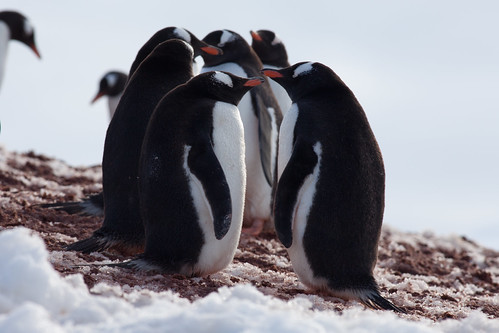 Press your tuxedo, take our Penguin Personality Quiz, and tell world leaders: protect Antarctic waters this summer. In honor of today’s World Penguin Day, The Pew Charitable Trusts has developed a Penguin Personality Quiz – we hope you’ll give it a try.
We Are Mismanaging Our Precious Oceans – Why You Should Care

GM salmon's global HQ – 1,500m high in the Panamanian rainforest
 Supersized genetically modified salmon grown fast and fat and after years of wrangling, are ready for market – but is the market ready for them? And why is the firm hidden away in Panama?
Wednesday, April 24, 2013
Apps for Ocean Management and Conservation
 The advent of “apps”, loosely defined here as easy-to-use, limited-functionality tools appropriate for mobile devices, has revolutionized our expectations of computing. Rather than relying on complex, multi-functional desktop tools all the time, users want tools that are simpler and can be applied on-the-go in their work.
Latest from World Ocean Radio: Toward New Definitions of Value
 In this episode of World Ocean Radio, host Peter Neill will discuss the possibility that we may have to abandon previously valued systems for a sustainable future. He will ask, "What form might our newly valued world take?" and will suggest that we need not look too far into the past to find a new model for the future, taking a critical look at the sustainable, nature-based value systems of indigenous peoples, many of which were designed to support growing populations with limited resources.
Tuesday, April 23, 2013
Biological Activity Alters the Ability of Sea Spray to Seed Clouds
 Ocean biology alters the chemical composition of sea spray in ways that influence its ability to form clouds over the ocean. That's the conclusion of a team of scientists using a new approach to study tiny atmospheric particles called aerosols that can influence climate by absorbing or reflecting sunlight and seeding clouds.
Scientists attack government climbdown on marine protection
The UK's top marine scientists have denounced government ministers for reneging on plans to protect marine life by banning the most destructive fishing and dredging in the seas around the British Isles.
Monday, April 22, 2013
Microplastic particles in North Sea could harm marine organisms and enter human food chain
 Researchers have discovered high levels of plastic particles and fibres, as
well as black carbon (BC), which is formed by the incomplete burning of fossil
fuels, in the waters of the Jade Bay, an inshore basin off the coast of Germany in
the Southern North Sea. The concentration of suspended particles are of concern
because they have the potential to be ingested by fish and other marine life, and
enter the food chain.
Researchers have discovered high levels of plastic particles and fibres, as
well as black carbon (BC), which is formed by the incomplete burning of fossil
fuels, in the waters of the Jade Bay, an inshore basin off the coast of Germany in
the Southern North Sea. The concentration of suspended particles are of concern
because they have the potential to be ingested by fish and other marine life, and
enter the food chain.
Wildfires Dump Massive Amounts Of Charcoal Into The Worlds' Oceans
 Wildfires turn millions of hectares of vegetation into charcoal each year but it wouldn't seem like it ends up in the oceans.
 Yet researchers have found that this charcoal does not remain in the soil, as previously thought. Instead, it is transported to the sea by rivers and thus enters the carbon cycle. The researchers analyzed water samples from all over the world. They demonstrated that soluble charcoal accounts for ten percent of the total amount of dissolved organic carbon.
US Geological Survey study helps inform rigs-to-reef plans
 The idea of turning old offshore drilling rigs into artificial reefs has been floating around for a while, and US Geological Survey scientists recently reported that there’s no sign that fish living near the rigs are contaminated by oil from the drilling operations.
Friday, April 19, 2013
Climate Change Affecting Height Intensity of Global Ocean’s Waves
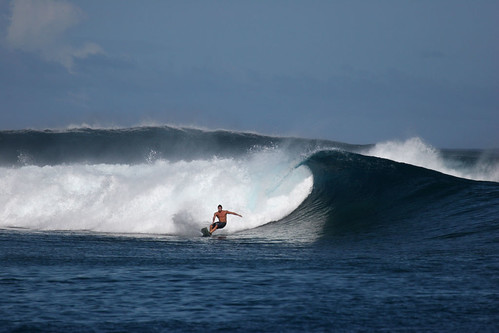 A study by Australia's Commonwealth Scientific and Industrial Research Organisation (CSIRO) has warned that the world's coastline beaches could experience swelling and intense levels and heights of pounding ocean waves due to climate change. Mark Hemer, CSIRO researcher and lead author of the study, said average annual wave heights could increase by as much as half a metre in coming decades as storm frequency and intensity in the Southern Ocean likewise increase.
Thursday, April 18, 2013
Reuters Fail — Oceans Are Absorbing The Heat, No Global Warming Slowdown
 Reuters has published an article that genuinely fails honest, researched, and trustworthy journalism. It claims (incorrectly) that climate scientists don’t know why the atmosphere isn’t warming as fast as it was. It claims (incorrectly) that there is a gap in the climate science and in climate scientists’ understanding of global warming, and that there is an unexpected global warming slowdown. Notably, the article doesn’t quote a single climate scientist….
Nash column: Killing the Earth’s oceans
 Here’s a riddle, what’s twice the size of Texas, is manmade, and floats? Also, while its parts get smaller, its mass keeps growing. Want another hint?
Evolving strategic competition in the Indian Ocean
 “The Indian Ocean area will be the true nexus of world powers and conflict in the coming years. It is here that the fight for democracy, energy independence and religious freedom will be lost or won.”
(Robert D. Kaplan)
“The Indian Ocean area will be the true nexus of world powers and conflict in the coming years. It is here that the fight for democracy, energy independence and religious freedom will be lost or won.”
(Robert D. Kaplan)
Victory! Offshore Oil Drilling Stopped in Belize
 Yesterday, Belize’s Supreme Court declared offshore drilling contracts issued by the Government of Belize (in 2004 and 2007) null and void, providing a dramatic and potentially definitive setback to The Government of Belize and the petroleum prospecting companies issued the contracts.
Wednesday, April 17, 2013
Accord Would Regulate Fishing in Arctic Waters
Obama ocean plan aims to protect economy, environment
 The White House released a plan on Tuesday aimed at protecting oceans, coastal and Great Lakes environments around the United States while safeguarding related businesses that support more than 44 million jobs.
Tuesday, April 16, 2013
European fisheries flip with long-term ocean cycle
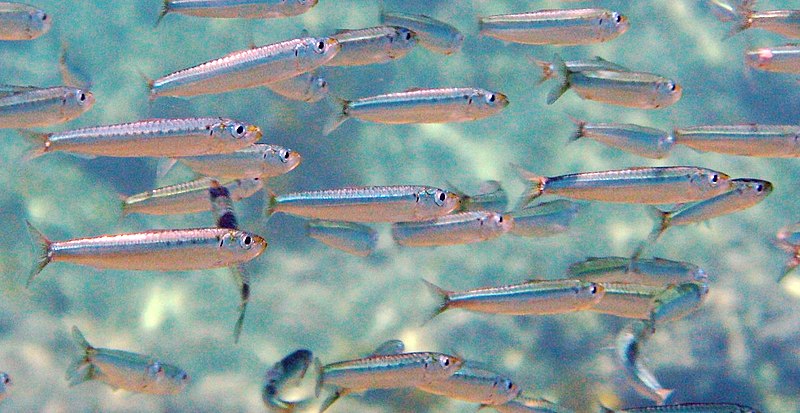 A sudden switch from herring to sardines in the English Channel in the 1930s was due to a long-term ocean cycle called the Atlantic Multidecadal Oscillation (AMO), an international study shows. This is the first evidence linking the AMO to trends in important European fisheries.
Resilience In Shelled Plants Exposed To Ocean Acidification Found By Scientists
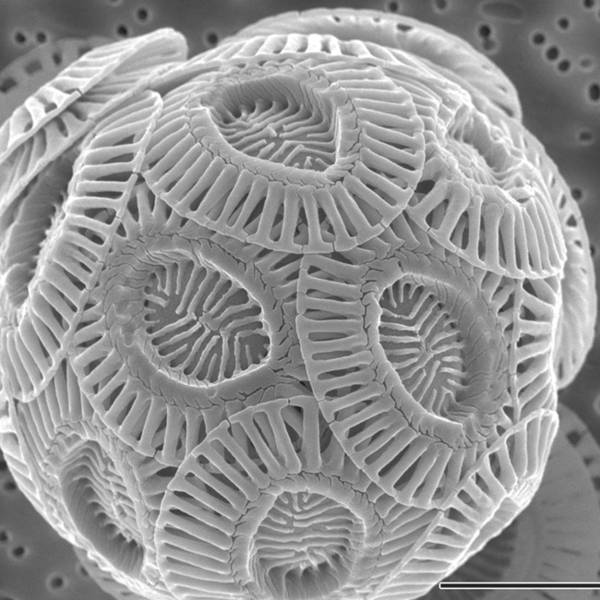 Marine scientists have long understood the detrimental effect of fossil fuel emissions on marine ecosystems. But a group led by a UC Santa Barbara professor has found a point of resilience in a microscopic shelled plant with a massive environmental impact, which suggests the future of ocean life may not be so bleak.
Cutting specific pollutants would slow sea level rise
 With coastal areas bracing for rising sea levels, new research indicates that cutting emissions of certain pollutants can greatly slow down sea level rise this century.
Monday, April 15, 2013
A 'green economy' requires a 'blue economy', warns FAO
 "There can not be a real green economy without a blue economy, which prioritizes the sustainable development of oceans and fisheries resources," states the director general of the United Nations Organization for Food and Agriculture (FAO), José Graziano da Silva.
Antarctic ice melting at record rate, study shows
 Summer ice is melting at a faster rate in the Antarctic peninsula than at any time in the last 1,000 years, new research has shown.
The evidence comes from a 364-metre ice core containing a record of freezing and melting over the previous millennium.
Summer ice is melting at a faster rate in the Antarctic peninsula than at any time in the last 1,000 years, new research has shown.
The evidence comes from a 364-metre ice core containing a record of freezing and melting over the previous millennium.
The High Seas, Our Future - Paris Appeal for the High Seas
 The Paris Appeal for the High Seas International Conference was held on 11 April 2013. Read on for the signatories of this Paris Appeal
Scientists call for larger ocean reserves
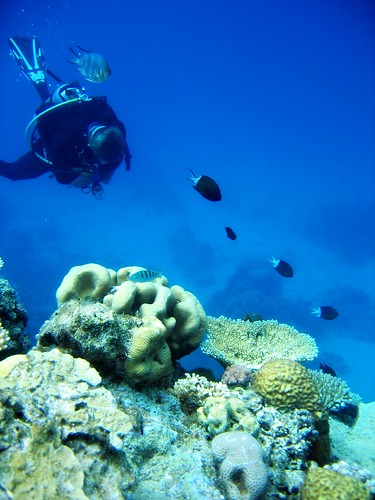 Leading international marine scientists have called for the protection of more, large marine wilderness areas in a bid to shield the world’s dwindling stocks of fish from destruction.
Are we winning the fight against IUU fishing?
 Adrian Tatum finds out how illegal fishing is affecting the global fishing industry and discovers what is being put in place to fight the battle against it.
Lobster industry fears another ocean warm up
 Ocean temperatures have been higher than normal in the Gulf of Maine, creating fears among lobstermen that there could be a repeat of last spring’s early harvest that resulted in a market glut, a crash in the prices fishermen get, and a blockade of Maine-caught lobsters in Canada.
Latest from World Ocean Radio: Global Ocean Commission
 There are many organizations, conferences and commissions dedicated to ocean policy, research and education. Yet public perceptions of ocean issues have not changed much in the last ten years, nor has there been encouraging progress on ocean-related issues. In this episode of World Ocean Radio, host Peter Neill will introduce yet another ocean advocate--the Global Ocean Commission--convened by a panel of figures from around the world intent on finding solutions to the crises facing the world ocean.
Friday, April 12, 2013
New genetic test shows up fish mislabelling
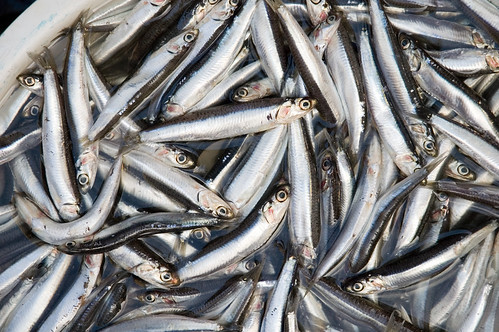 Scientists have found a new way of testing for the genes of particular kinds of fish quickly, cheaply and accurately.The breakthrough will benefit marine ecology, where it's already shown that the mix of fish larvae in the English channel is different from what we thought, and could also help detect mislabelled fish - in fact, it's already done so, spotting fraudulent so-called anchovies, sardines and sprat.
MSC accused of making sustainable certification too easy
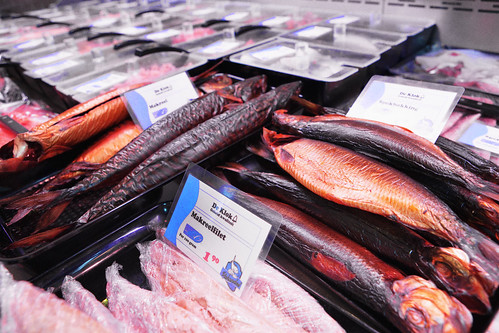 The sustainability of one third of all seafood certified as the ‘best environmental choice’ has been questioned by a new study. Researchers reviewing seafood with the Marine Stewardship Council (MSC) eco-label concluded that the certification scheme could be misleading consumers.
Thursday, April 11, 2013
TRIAXYS Next Wave Sensors selected to support Ocean Observatory Initiative
 AXYS Technologies Inc. (AXYS) are pleased to announce a contract award from the Woods Hole Oceanographic Institution to provide up to 24 TRIAXYS™ Next Wave Directional Wave Sensors as a component of the Ocean Observatories Initiative (OOI).
Ocean Nutrients a Key Component of Future Change, Say Scientists
 Variations in nutrient availability in the world's oceans could be a vital component of future environmental change, according to a multi-author review paper involving the National Oceanography Centre, Southampton (NOCS).
UK sea protection plans 'floundering'
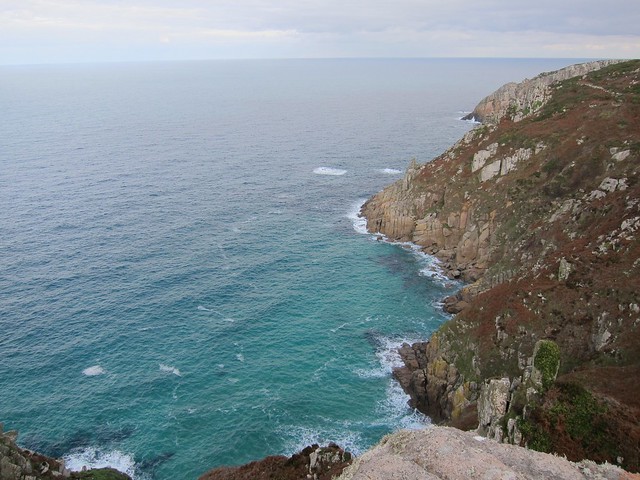 The government is letting moves to create a network of areas that protect the UK's seas and their wildlife "flounder", MPs have warned.
The high seas, the future of humanity: Live from International Conference EESC in Paris today
 In Paris today - La Haute Mer - 'The High seas, the future of Humanity' Conference takes place. The conference proposes to clarify the issues relating to the management of the high seas, and brings together civil society groups from France and around the world to discuss issues affecting the hight seas. Watch our live stream throughout today for more information.
Wednesday, April 10, 2013
Iceland volcano ash cloud triggers plankton bloom
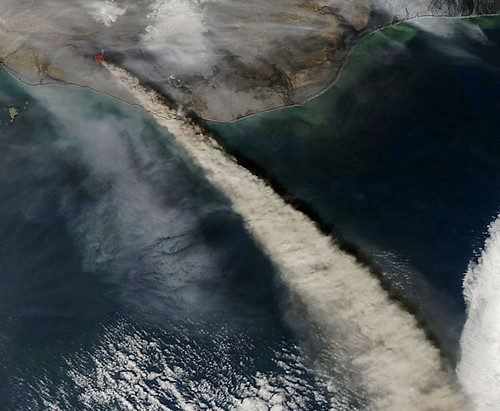 The 2010 Icelandic volcanic eruption, which disrupted European flights, also had a "significant but short-lived" impact on ocean life, a study shows. Ash from the Eyjafjallajokull volcano deposited dissolved iron into the North Atlantic, triggering a plankton bloom.
Tuesday, April 9, 2013
EU Taps Spanish Comms Firm For Fisheries Reform Assignment
 The European Union has called in a Spanish PR firm to oversee the sensitive €11m assignment supporting the overhaul of its controversial fisheries policy.
South Africa declares first offshore marine protected area
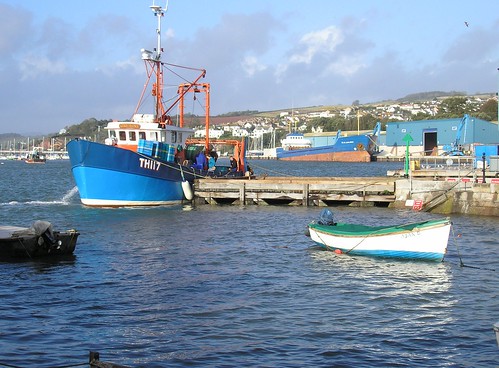 WATER and Environmental Affairs Minister Edna Molewa has declared South Africa’s first offshore marine protected area, spanning 180,000km² around the Southern Ocean’s Prince Edward and Marion islands, the Department of Environmental Affairs said on Tuesday.
Sea urchins evolving to cope with ocean acidification
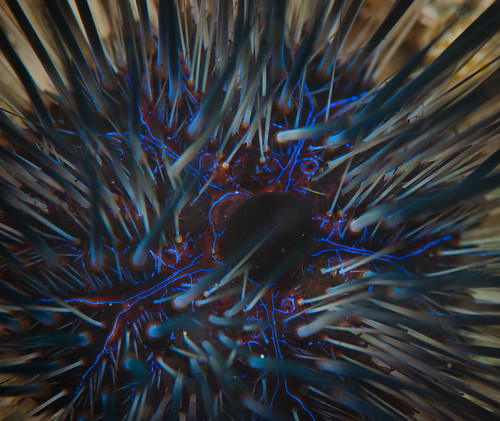 A little good news on the climate change front, for a change: some marine organisms may be able to adapt surprisingly well to ocean acidification caused by carbon dioxide from burning fossil fuels.
Greenpeace - Support Sustainable Fishermen
These days, the European fish stocks are being depleted at a previously unseen pace. If we do not act now, there's a good chance that our fisheries – big and small – will no longer exist 50 years from now. This destructive path can be changed by our European Fisheries Ministers who ultimately set fishing quotas and decide how the massive subsidies (our tax money) is being dealt. Right now the most destructive vessels get almost all of the money. Greenpeace created this short animated narrative to help raise awareness about this overcapacity problem – simply put, there's too many boats to catch too few fish.
Greenpeace - Support Sustainable Fishermen from Stupid Studio on Vimeo.
Greenpeace - Support Sustainable Fishermen from Stupid Studio on Vimeo.
Oil From Deepwater Horizon Spill Broken Down By Hungry Ocean Bacteria, Researcher Says
 New research from the University of Tennessee indicates that the Gulf of Mexico has a natural ability to clean itself, even in the wake of an environmental disaster like the Deepwater Horizon oil spill that caused an estimated 210 million gallons of oil to flow into the gulf after an explosion on the oil rig killed 11 men and ultimately caused the worst offshore oil spill in U.S. history.
Monday, April 8, 2013
Oceans may explain slowdown in climate change: study
 Climate change could get worse quickly if huge amounts of extra heat absorbed by the oceans are released back into the air, scientists said after unveiling new research showing that oceans have helped mitigate the effects of warming since 2000.
 Heat-trapping gases are being emitted into the atmosphere faster than ever, and the 10 hottest years since records began have all taken place since 1998. But the rate at which the earth's surface is heating up has slowed somewhat since 2000, causing scientists to search for an explanation for the pause.
Latest from World Ocean Radio: Underwater Observation
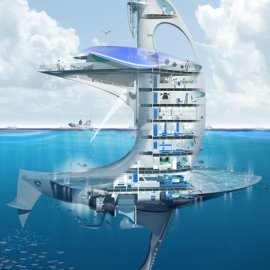 Advances in technology bring us new, visionary underwater devices to record and transmit observational data. In this episode of World Ocean Radio, host Peter Neill will discuss two such observatories: Aquarius, operated by Florida International University, and Sea Orbiter, a conceptual vehicle currently in research and development by architect Jacques Rougerie--both technological advances that may have, in the past, existed only in our imaginations.
Thursday, April 4, 2013
Robotic jellyfish for long duration ocean monitoring
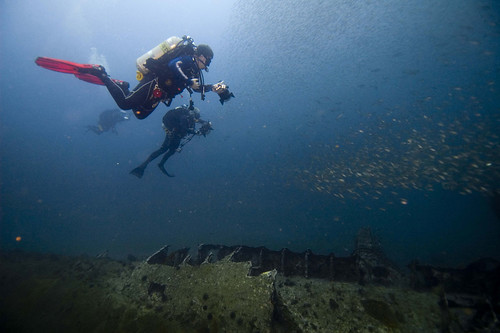 Virginia Tech College of Engineering researchers have unveiled a life-like, autonomous robotic jellyfish the size and weight of a grown man, 5 foot 7 inches in length and weighing 170 pounds, as part of a U.S. Navy-funded project. The prototype robot, nicknamed Cyro, is a larger model of a robotic jellyfish the same team – headed by Shashank Priya of Blacksburg, Va., and professor of mechanical engineering at Virginia Tech – unveiled in 2012. The earlier robot, dubbed RoboJelly, is roughly the size of a man’s hand, and typical of jellyfish found along beaches.
Are Jellyfish Taking Over Our Oceans? Expert to Explain During Special Lecture at Birch Aquarium at Scripps
 As human activities continue to take their toll on the health of ocean ecosystems, it appears one group is thriving: jellies. The combined impacts of ocean warming, overfishing, pollution, ocean acidification, and other threats are creating ideal conditions for these resilient creatures to multiply—-and take over the ocean.
Subscribe to:
Posts (Atom)